 By
By Installing new tiles completely transforms a room. It adds instant value to your home. But homeowners often notice a stubborn problem after new tiles are installed. A cloudy, plastic-like film covers the new stone or ceramic tiles. This haze can spoil the clean look of a freshly tiled indoor area.
If your tiler used epoxy grout, that film is not just dust. It is epoxy grout residue. Traditional cement grout wipes away easily with a damp sponge. Hardened epoxy behaves very differently. It creates an ugly, stubborn layer across your floor surface.
Trying to tackle epoxy grout residue removal with household products is highly frustrating. Calling a regular domestic cleaner often leads to the exact same result. Regular cleaners lack the tools for this specific job. You might even ruin your brand-new tiles before you get to enjoy them.
Clearing away this stubborn residue requires professional tools. Expert techniques make all the difference to your floors.
Understanding the Problem: What is Epoxy Grout?
Why is this film so difficult to shift? It helps to know what epoxy grout actually is.
Traditional grout has a cement base. Epoxy grout uses a mix of two parts: a resin and a hardener. Combining these parts forces a strong chemical reaction. This trick makes the material completely waterproof. It also makes it highly stain-resistant and very long-lasting. It remains solid for decades without wearing away.
Epoxy is perfect for busy indoor areas. It seals walk-in showers, kitchen splashbacks and high-traffic indoor floors. However, those exact same qualities mean it bonds like superglue. Once it cures on the face of your tiles, it locks on tight. It creates a stubborn bond that repels ordinary water.
Why Regular Cleaners and DIY Methods Fall Short
A standard house cleaner is fantastic for everyday tidying. However, they lack the specialised equipment for heavy post-renovation cleanup. Here is where DIY methods and regular cleaners usually go wrong:
1. Household Chemicals Won’t Touch It
Standard bathroom cleaners dissolve grease, soap scum and everyday dirt. They have zero effect on cured resin. Spraying everyday cleaner onto an epoxy haze is pointless. It is like trying to wash away plastic wrap with dish soap. The liquid just slides right off. This isn’t just about elbow grease; WorkSafe Victoria explains that hazardous substances can affect health and that employers must control risks linked to hazardous substances in the workplace. This is why epoxy-softening products and strong cleaning chemicals should be handled with the right training, safety processes, and protective equipment.
2. The Danger of Scratching Expensive Tiles
When the film stays stuck, people start scrubbing harder. Ordinary cleaners might use green scouring pads, steel wool or sharp metal scrapers. Doing this is highly dangerous for your floors. You may remove a little epoxy, but you will likely scratch the tile surface. It can permanently ruin and gouge natural stone like marble or travertine. Scratched tiles can become a costly problem and may affect the appearance of a newly finished surface.
3. Timing is Everything
Epoxy grout sets very quickly. Tilers must clean the tiles meticulously during application. If they miss a spot, the residue hardens into a permanent bond within hours. Once it fully cures, safe removal usually requires specialised products, correct dwell time, and professional equipment.
The Professional Approach to Grout Haze Removal Services
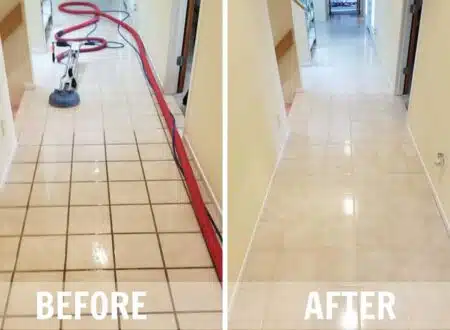
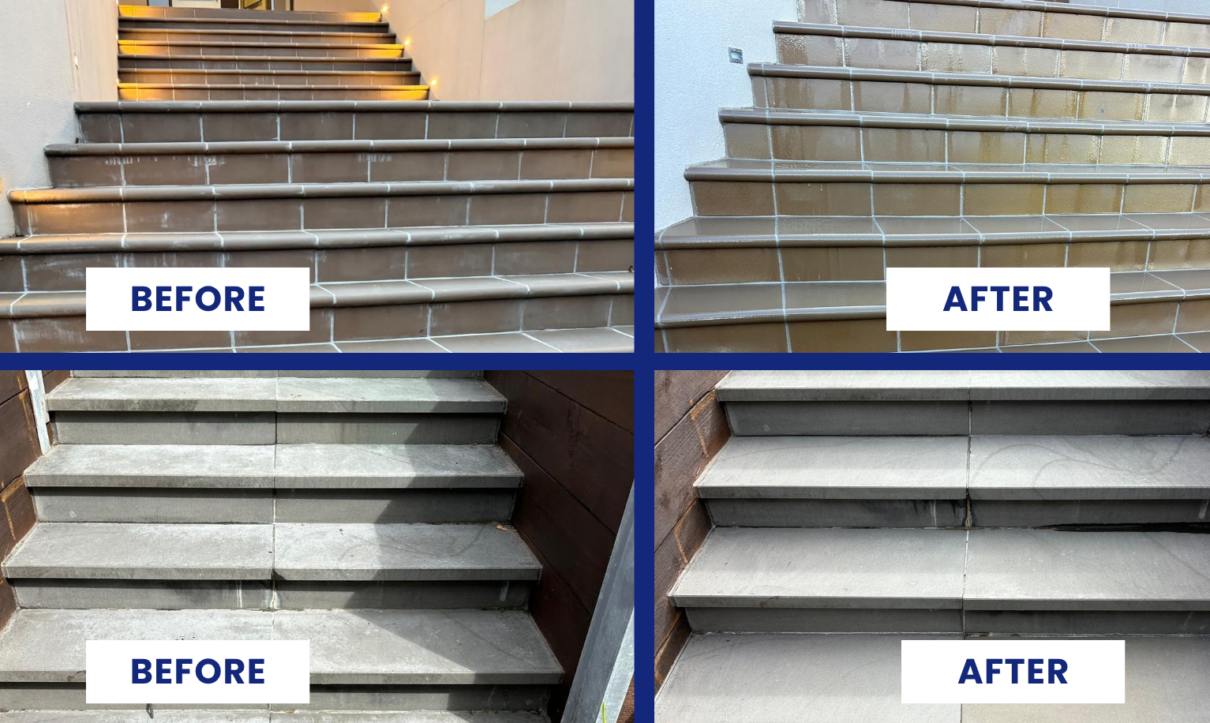
This is where specialised grout haze removal services become essential. Professional tile restoration technicians do not just scrub harder. They use chemistry and commercial equipment to dissolve the bond safely. They also understand how different tile materials react to treatment.
When you hire specialists to handle indoor tile cleanup, the process involves:
- Targeted Chemical Softeners: Professionals use industrial-strength gel strippers. These are formulated to break down epoxy polymers without damaging the tile beneath.
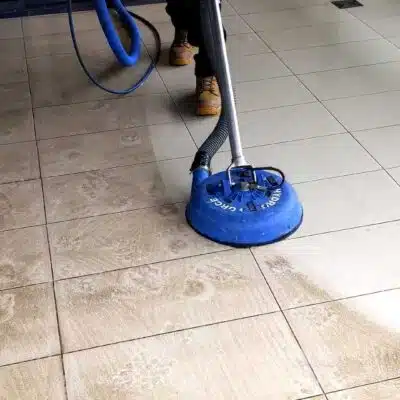
- Controlled Heat and Agitation: Special agitation tools and controlled heat soften the residue. This allows technicians to emulsify and lift it safely.
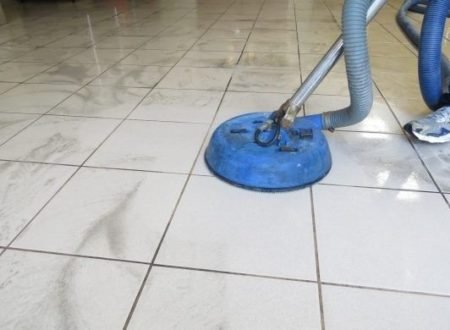
- High-Powered Extraction: The process breaks down the epoxy haze into a liquid slurry. Technicians must extract this slurry immediately using commercial vacuum systems so it does not dry back onto the floor.
Dealing with a stubborn haze on fresh indoor tiles? It is better to use professional Grout Haze removal services instead of testing harsh DIY products on a newly finished surface.
Protect Your Surfaces with the Right Removal Method
Post-renovation haze is not the only issue indoor tiled floors face. Over time, everyday foot traffic and spills trap dirt deep inside grout lines. Mopping with the wrong detergents makes it worse. It builds up a sticky layer that attracts more grime. Soon, a clean room looks tired and dingy.
Take care of your floors and keep your indoor tiles looking fresh. Turning to expert grout cleaning solutions is the smartest choice. A professional deep clean uses high-pressure hot water. This process lifts deep grime out of grout lines that basic mopping cannot reach. It instantly updates your entire living room.
Trust the Indoor Tile Specialists
Your tiles are a major investment in your home. Do not risk permanent chemical damage or ugly scratches. Never let regular cleaners experiment on tough epoxy residue.
Do it right the first time. Call the team at Tile Cleaning Melbourne today for a free indoor cleaning and haze removal quote. Let experienced technicians remove stubborn residue and bring back a cleaner, clearer tile finish.